

Start with the per-guest baseline
The single most important number in your wedding costs breakdown is the per-guest average. This metric drives the majority of your variable expenses, from catering and bar service to rentals and favors. While fixed costs like venue fees or photography remain constant regardless of attendance, the per-guest price determines how quickly your budget inflates as you add names to the list.
For 2026, you should plan for a baseline of $150 to $300 per guest for a typical celebration. This range covers food, non-alcoholic beverages, and basic service. However, this figure shifts dramatically based on your location and service level. In high-cost markets like San Antonio, the average per-guest cost can reach approximately $268, while other regions may sit closer to the lower end of that spectrum.
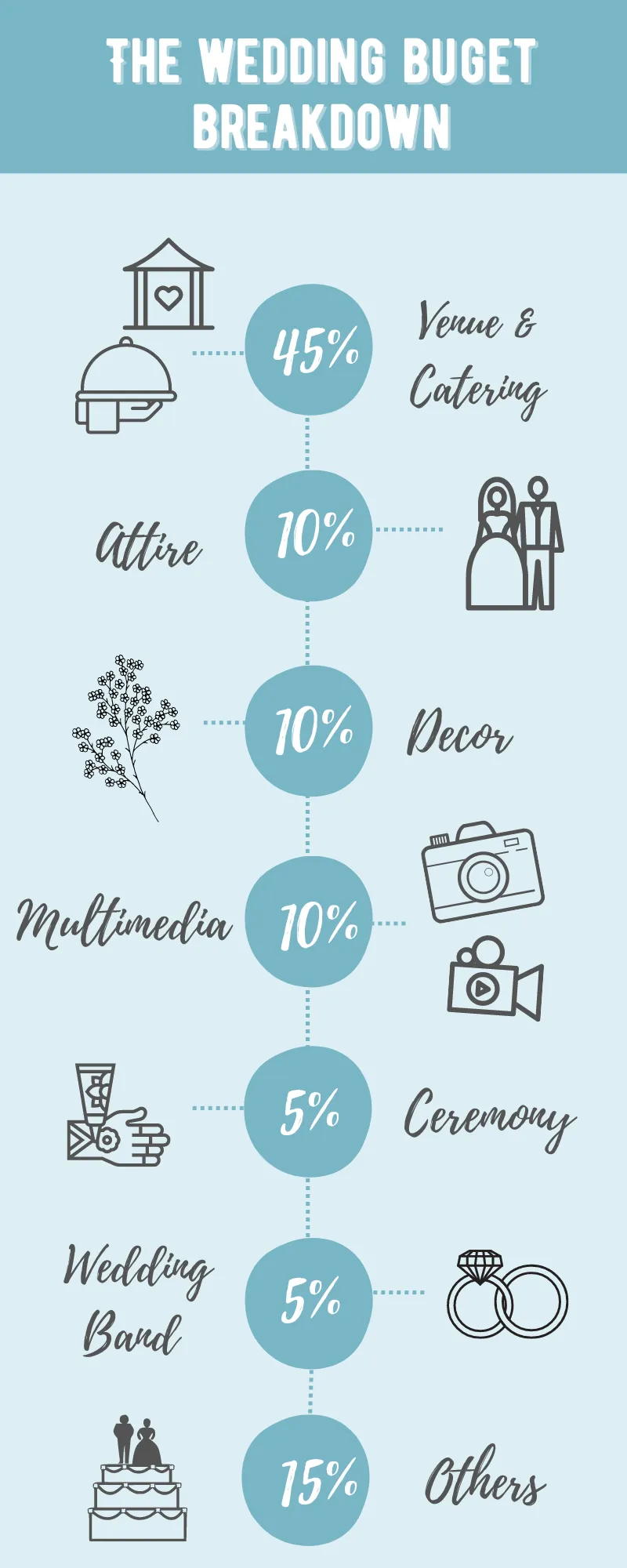
To see how this math works in practice, consider that a $100 per-guest package often breaks down to roughly $64 for food and $36 for beverages. This specific split usually includes a top-shelf bar package with signature drinks. If you upgrade the menu or switch to an open bar with premium spirits, that per-guest number can easily jump by $50 or more. Understanding this baseline early prevents the "sticker shock" that often follows the final headcount confirmation.
Calculate DJ rates and entertainment fees
Music sets the tone for your reception, but entertainment costs can vary wildly depending on the service level you choose. In 2026, the average cost for professional wedding DJ services typically ranges from $1,200 to $2,500 for a standard four-hour package. This baseline usually includes a basic sound system, wireless microphone, and a curated playlist. However, if you are aiming for a high-energy atmosphere with advanced lighting or a larger guest count, premium packages can easily push past $3,500.
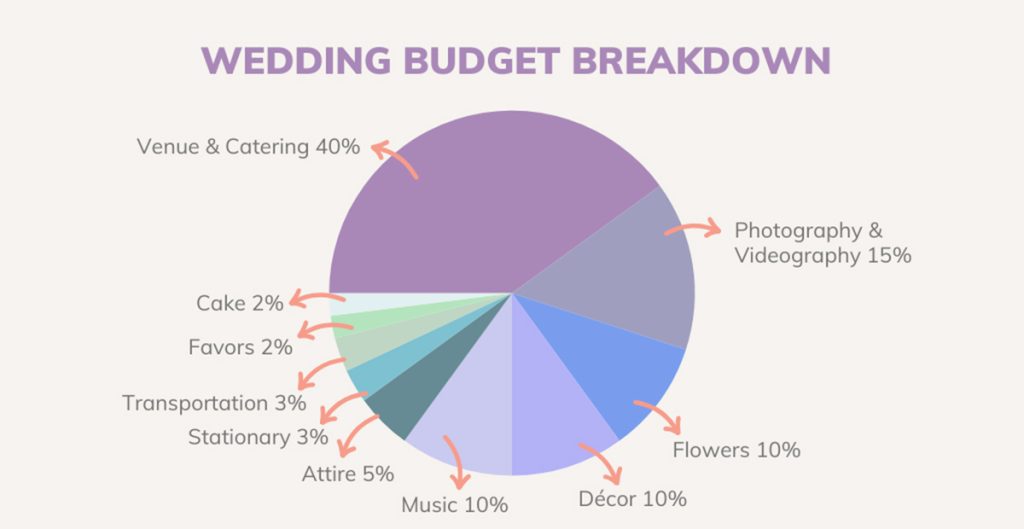
To help you visualize where your money goes, here is a breakdown of what to expect from standard versus premium entertainment options. Understanding these differences helps you avoid hidden fees for equipment upgrades or overtime hours.
When comparing quotes, pay close attention to overtime rates. Most DJs charge an hourly premium of $150 to $250 after the contracted time ends. If your reception runs late, these fees add up quickly. Additionally, verify if the quoted price includes travel and setup time, as some vendors charge extra for venues outside their standard service radius. By clarifying these details upfront, you can keep your wedding costs predictable and avoid surprise charges on the big day.
Estimate open bar expenses accurately
Open bar costs are one of the most volatile line items in a wedding budget. Unlike catering, where food costs are relatively fixed per plate, beverage expenses scale unpredictably based on guest consumption and service style. In 2026, the national average for wedding catering sits at $6,927, but beverage packages often add $36 to $100 per adult on top of that, depending on the tier selected [src-serp-8].
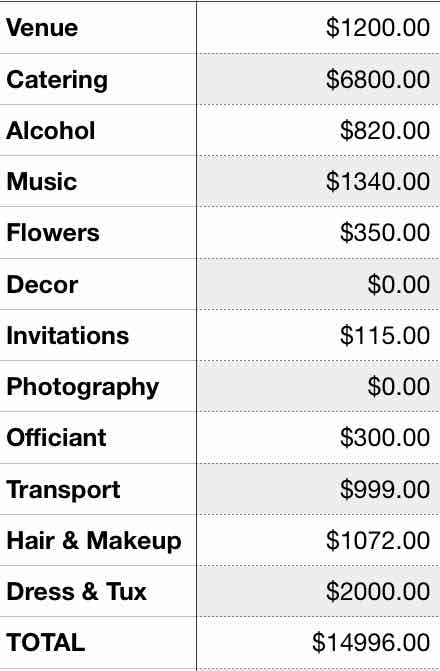
To prevent budget overruns, you need to understand the two primary pricing models. The per-person package is the most common and predictable. Venues or caterers charge a flat rate per guest, which typically includes a set number of drink hours, a specific brand list, and sometimes signature cocktails. This model caps your liability; if guests drink heavily, you don't pay extra. The open bar with consumption billing model is riskier. You pay a lower base fee, but you are billed for every additional drink poured beyond the included allowance. This can lead to surprise invoices if the party stays late or prefers premium spirits.
A realistic baseline for a standard open bar in 2026 is approximately $150 to $300 per guest when including all guest-dependent costs like food, rentals, and beverages [src-serp-6]. If you are aiming for a top-shelf experience, expect to pay closer to $100 per adult just for the beverage portion, as seen in many comprehensive F&B packages [src-serp-6]. Use the calculator below to model these costs based on your guest count and desired service level.
Account for planner and coordinator fees
Wedding planning fees are one of the most variable line items in your budget, often confusing couples who assume "planner" and "coordinator" mean the same thing. The cost difference is stark: full-service planners typically charge 10% to 15% of your total wedding budget, while day-of coordinators usually charge a flat fee between $1,500 and $3,000. Understanding this distinction is essential for accurate budgeting.
A full-service planner is involved from the initial venue hunt to the final cleanup. They manage vendors, design the aesthetic, and handle legal logistics. For a $35,000 wedding, this service alone could cost $3,500 to $5,250. This option is best for couples who need comprehensive project management or are planning destination weddings. A day-of coordinator, conversely, steps in only in the final weeks. Their role is execution: ensuring the timeline runs smoothly and vendors know their cues. This is a cost-effective choice for organized couples who have already handled the heavy lifting.
When budgeting, always ask how the fee is structured. Some planners charge hourly rates ($50–$150/hour) for partial planning, which can add up quickly if scope creep occurs. Others bundle their fee into vendor commissions, though this is less common in 2026 due to stricter transparency laws. Be sure to clarify what "day-of" actually means; some coordinators start work two weeks prior for rehearsal and setup, which justifies the higher end of the flat-fee range.
Identify hidden costs couples miss
Beyond the major line items, several smaller expenses often slip through the cracks of a standard budget. These "hidden" costs can add thousands to your total if not anticipated early.
- Service Charges and Taxes: Many venues and caterers add a 20–25% service charge on top of food and beverage totals. This is distinct from gratuity and often goes directly to the vendor, not staff. Always confirm if this is included in the per-guest quote.
- Cake Cutting Fees: If you bring in an outside baker, venues frequently charge a $2–$5 per-person fee to cut and plate the cake. For a 100-guest wedding, this adds $200–$500 instantly.
- Overtime and Setup: As noted with DJs, venue overtime fees can range from $500 to $1,000 per hour. Similarly, early setup fees for vendors who need access before the standard window can add $100–$300 per vendor.
- Attire and Beauty: The average wedding dress costs $1,800, but alterations, veils, and undergarments often add another $500–$800. Groom’s attire and hair/makeup for the bridal party can easily exceed $1,000 if not bundled.
Estimate your total wedding costs
Planning a wedding involves juggling dozens of line items, from the venue deposit to the open bar. Rather than guessing, use this interactive tool to build a realistic budget based on 2026 market rates.
Enter your guest count, select your DJ tier, and choose your bar style. The calculator aggregates these inputs with current industry averages to give you a personalized financial estimate. This helps you see exactly where your money goes and where you might have room to adjust.
Use this estimate as your baseline. You can tweak the numbers later as you receive actual quotes from vendors in your area.
Check your budget against benchmarks
Your total wedding costs should align with the scale of your guest list and venue selection. National averages provide a baseline, but local market conditions often push numbers higher. Understanding where your calculated total fits within common budget tiers helps you identify potential shortfalls or areas where you can allocate more for priority items.
A $30,000 budget typically covers the national average, accommodating 100–150 guests with moderate catering and standard vendor packages. This tier requires careful management of guest count and often means skipping premium add-ons like open bars or live bands. In contrast, a $70,000 budget allows for a more expansive experience, including higher-end venues and larger guest lists, but may still require compromises on luxury details.
For couples aiming for a $100,000+ wedding, costs usually reflect destination events, multi-day celebrations, or large guest counts exceeding 200 people. These budgets often include premium venues that average $40,000 alone, leaving less room for other expenses unless the total is adjusted accordingly. Use these benchmarks to stress-test your calculator results and ensure your final numbers are realistic for your specific vision.
Frequently asked questions about wedding costs
Planning a wedding budget requires looking at both national averages and local realities. While the 2026 national average for a wedding sits between $30,000 and $35,000, costs can vary significantly based on guest count and location. Understanding these thresholds helps you allocate funds to the vendors that matter most, from open bar packages to venue rentals.
No comments yet. Be the first to share your thoughts!