

Average wedding costs in 2026
The national average wedding cost has settled around $36,000 in 2026, holding steady after years of post-pandemic inflation [Fidelity]. While this figure represents a broad baseline, the real financial pressure comes from the heavy hitters: reception venues and catering. Together, these two line items typically consume more than 40% of the total budget, making them the first places couples need to look when planning their finances.
Breakdowns from industry trackers like Zola show that the average venue rental sits at approximately $8,573, while catering averages $6,927 [Zola]. These are not fixed prices, but they provide a reliable starting point for estimating your total spend. When you add in other essential vendors—such as photography, flowers, and attire—the numbers quickly climb, often pushing the final total well above the national average for those in high-cost metropolitan areas.
A practical rule of thumb for budgeting is to allocate $150 to $300 per guest. This range covers the guest-dependent costs like food, beverages, and rentals, though it excludes fixed expenses like photography or music [Zola]. Using this per-guest metric helps you visualize the scale of the event before diving into specific vendor quotes. It also highlights why guest count is the single most influential factor in determining your overall wedding cost.
Calculate your total wedding budget
Planning a wedding in 2026 requires looking at real numbers, not just guesswork. According to Zola, the national average cost for a wedding is rising, with venue rentals averaging $8,573 and catering at $6,927 for a standard guest count. The Knot reports that venue and rentals take up 29% of the budget, while catering, cake, and drinks account for another 24%.
To get a realistic estimate for your specific situation, use the calculator below. It adjusts costs based on your guest count, location tier, and vendor choices. This tool helps you see how small changes—like switching from an open bar to a limited bar or choosing a weekday venue—impact your bottom line.
These figures are estimates based on 2026 market data. Actual costs will vary depending on your specific vendors and regional pricing. Use this as a starting point to allocate your funds wisely, ensuring you prioritize the elements that matter most to you.
Venue and catering expenses
Venue rental and catering represent the two largest line items in a wedding budget, typically consuming over half of the total spend. According to 2026 data from Zola, the national average for venue rental is $8,573, while catering costs average $6,927. The Knot’s research aligns with this distribution, noting that venues account for roughly 29% of the budget and catering for 24%.
These averages are heavily influenced by guest count. Most couples budget between $150 and $300 per head for food and beverage, which includes rentals and service staff. Because catering is priced per person, adding just ten guests can increase the total bill by $1,500 to $3,000. Venue fees, by contrast, are often fixed regardless of whether you host 50 or 150 people, though larger spaces may carry higher base rates.
Costs vary significantly based on the style of event and location. The table below compares typical ranges for different wedding formats.
DJ rates and entertainment costs
Entertainment is one of the first line items couples trim when tightening a wedding budget, but pricing varies wildly depending on whether you hire a DJ or a live band. According to 2026 data from Zola and The Knot, a professional DJ typically costs between $1,200 and $2,500, while a four-piece band can range from $3,000 to $6,000 or more. These figures usually cover the performance itself, but they rarely include the hidden fees that often surprise couples at checkout.
The real cost of entertainment lies in the add-ons. Most vendors charge for travel and accommodation if the venue is outside their standard service area. Overtime fees are another common trap; if your reception runs past the contracted end time, you could face hourly rates of $150 to $300 per artist. Additionally, some DJs require a separate sound engineer for larger venues, adding $300 to $500 to the final bill.
Use the calculator below to estimate your total entertainment budget. It includes base rates for both DJs and bands, plus estimated travel and overtime costs based on a 100-guest wedding. Adjust the inputs to reflect your specific vendor quotes and timeline.
Open bar expenses and alcohol costs
Alcohol typically accounts for 10% to 15% of your total wedding budget, making it one of the largest variable expenses after catering. Understanding how venues calculate these costs is essential for avoiding surprise overages on your final bill. Most caterers and venues offer two primary pricing models: a per-hour rate or a per-guest rate.
Per-hour pricing
Per-hour pricing is common for venues that provide a dedicated bartender and bar setup. In 2026, expect to pay between $50 and $100 per hour for a single bartender. This model works best if your reception has a defined timeline, such as a four-hour cocktail hour followed by a three-hour reception. You pay for the time the bar is open, regardless of how many drinks are served. This can be cost-effective if your guests drink moderately, but expensive if the party extends late into the night.
Per-person pricing
Per-person pricing, often called a "consumable" or "open bar package," charges a flat fee for each guest attending the reception. Current rates range from $30 to $60 per person for a standard open bar. This fee usually includes a set selection of domestic beers, house wine, and well spirits. Premium liquor, craft cocktails, or imported beers often add $5 to $15 per person to this base rate. This model is predictable because the cost scales directly with your guest count, making it easier to budget upfront.
Calculating your total
To estimate your total alcohol expense, multiply the per-person rate by your guest count. For example, a 150-guest wedding at $40 per person equals $6,000. If you choose a per-hour model, multiply the hourly rate by the total hours of service. A $75/hour bartender for 7 hours equals $525, plus the cost of the beverages themselves, which are often billed separately or included in a higher hourly rate.
Hidden fees to watch for
Beyond the base drink costs, several hidden fees can inflate your final bill. Many venues charge a service fee of 18% to 22% on all alcohol sales. Additionally, a gratuity of 15% to 20% is often automatically added for bartenders. Some caterers also charge a "corkage fee" if you bring your own wine, though this is less common with open bars. Always ask for a detailed breakdown that includes these percentages before signing your contract.
Hidden wedding costs to watch
Initial budgeting often focuses on the headline numbers—the venue rental and the DJ package—while leaving the backend fees for last-minute surprises. In 2026, service charges, taxes, and gratuities are the most common line items that inflate the final bill beyond what was quoted. These costs are rarely included in the base price of vendors, meaning a $3,000 DJ contract can easily become $3,600 once the paperwork is signed.
Service charges are distinct from tips. Venues and caterers typically add a 18% to 22% service charge to cover labor and operational overhead. While this helps pay the staff, it does not guarantee that the servers or bartenders receive a direct gratuity. Couples frequently assume the service charge covers tipping, only to find themselves writing extra checks at the end of the night to ensure their vendors are treated fairly.
Taxes and credit card fees are the other silent budget killers. Sales tax on catering and alcohol varies by state and county, often adding 5% to 10% to the food and beverage total. Additionally, many vendors now process payments online, passing a 3% to 4% credit card processing fee onto the couple. If you pay your $5,000 open bar deposit by card, you are effectively paying $5,150.
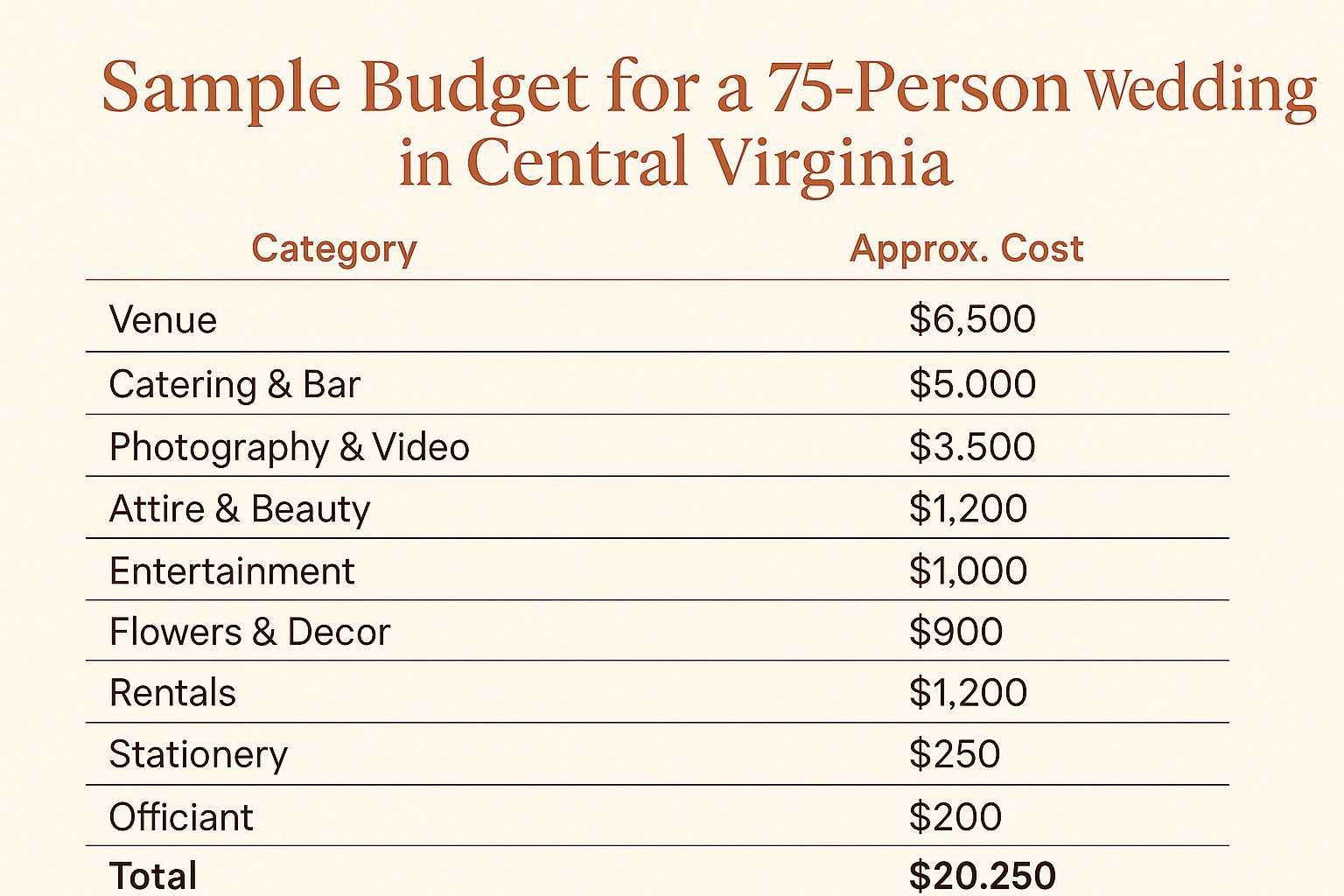
To avoid these surprises, treat every vendor quote as a starting point, not a final price. Ask specifically about "all-in" pricing that includes taxes and service charges. If a vendor cannot provide a final number, request a written estimate of the additional 20% to 25% you should budget for these hidden costs. This approach ensures your total spend matches your financial reality.
Frequently asked questions about wedding costs
Here are answers to the most common budgeting questions for 2026 weddings, based on current national averages and vendor rates.
No comments yet. Be the first to share your thoughts!