

Where wedding costs actually go
The national average wedding cost sits around $35,000 to $36,000, a figure that has remained relatively stable despite inflationary pressures in other sectors. This baseline is driven primarily by the reception venue and catering, which together consume more than 40% of the total budget. Understanding this distribution is the first step in financial planning, as these two categories leave little room for negotiation without significantly altering the guest experience.
Venue rentals typically account for 29% of the total spend, covering the space, tables, chairs, and basic utilities. Catering, including the cake and beverages, makes up another 24%. While photography and videography are often cited as essential memories, they generally represent about 10% of the budget. Floral design and decor, though visually prominent, usually fall between 8% and 10%, depending on the season and flower types chosen.
To see how these percentages apply to your specific budget, use the calculator below. Adjust the total amount you plan to spend, and the tool will estimate the dollar amount allocated to each major category based on current industry averages.
Calculate your total wedding budget
The national average wedding cost sits around $34,000, but your specific number depends on how many vendors you hire and where you host the event. Use the tool below to plug in your local estimates for venue, catering, DJ, bar service, and planner fees.
This calculator uses standard market rates to give you a realistic baseline. Adjust the inputs based on quotes you’ve received or local averages for your city to see where your budget might stretch or shrink.
Note that these figures represent direct vendor costs. They do not include attire, invitations, or travel expenses, which can add another $5,000 to $10,000 depending on your guest count and location.
DJ rates and music budgeting
Entertainment is often the second-largest vendor expense after catering. While a live band typically commands $3,000 to $8,000 or more, a professional DJ offers a more budget-friendly alternative, generally ranging from $1,200 to $2,500 for a standard six-hour engagement. This price difference makes the DJ a popular choice for couples looking to allocate funds toward other priorities, such as photography or venue upgrades.
Beyond the base rate, you need to account for setup time, travel fees, and potential overtime. Most DJs require an hour before the event to set up sound equipment and lighting. If your reception runs late, expect to pay an hourly overtime fee, usually between $150 and $250 per hour. Always clarify these details in your contract to avoid surprise charges on the big day.
Use the calculator below to estimate your total entertainment budget based on your guest count and preferred service level. This tool helps you visualize how overtime hours or premium sound packages impact your final cost.
| Vendor Type | Avg. Base Cost | Typical Overtime Fee | Setup/Load-in |
|---|---|---|---|
| Professional DJ | $1,200–$2,500 | $150–$250/hr | 1 hour |
| Live Band (4–6 pcs) | $3,000–$8,000+ | $200–$400/hr | 1.5–2 hours |
| DJ + MC Package | $1,800–$3,500 | $175–$300/hr | 1 hour |
Open bar expenses and drink packages
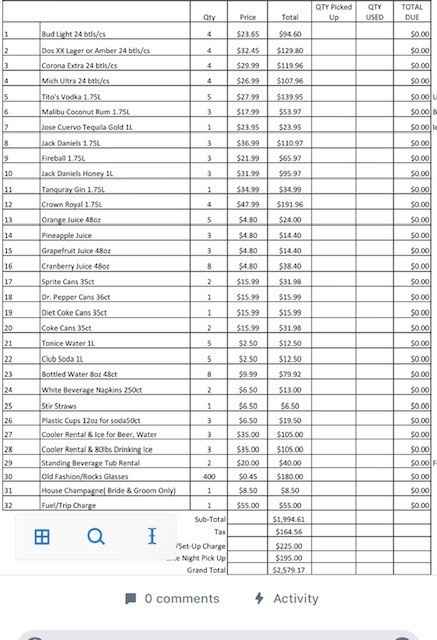
Choosing between an open bar and a cash bar is one of the first major decisions for your reception budget. An open bar covers all drinks for guests, while a cash bar requires attendees to pay for their own alcohol. Most couples opt for a hybrid approach: offering beer, wine, and a signature cocktail for free, then charging for premium spirits and liquors.
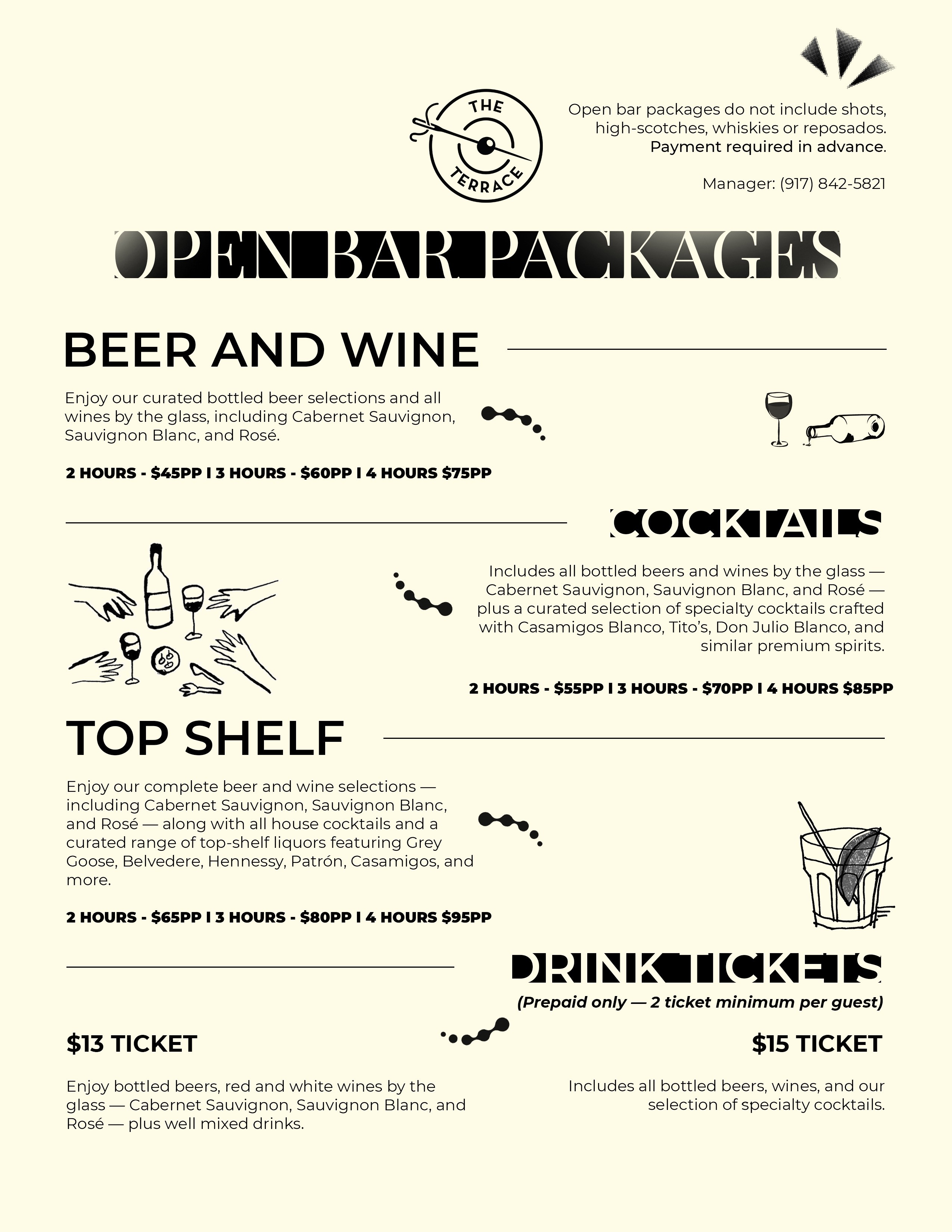
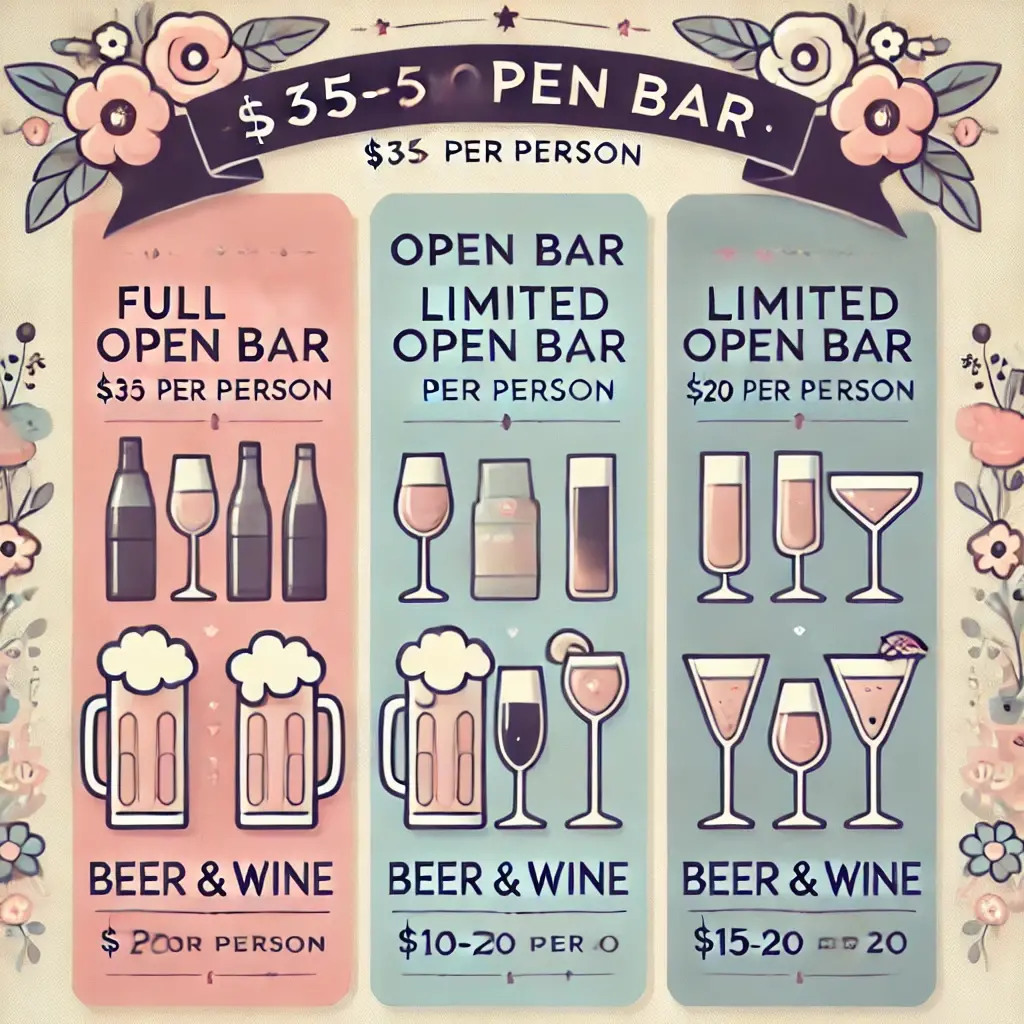
According to industry data, open bar costs typically range from $25 to $75 per guest for a four-hour reception. This wide variance depends on your guest count, local liquor laws, and whether you hire a full-service bartender or a self-serve station. For a 100-guest wedding, you might spend between $2,500 and $7,500 just on beverages. Remember that catering and drinks usually account for about 24% of the total wedding budget, making this a significant line item.
To estimate your specific costs, use the calculator below. It factors in the number of guests, hours of service, and your chosen drink tier to give a realistic range.
When reviewing vendor quotes, ask if service charges and taxes are included. Many companies add a 20-25% service fee on top of the beverage total, which can quickly inflate your final bill. Always clarify whether the quote covers setup, cleanup, and glassware rental to avoid surprise fees on your final statement.
Hidden fees that inflate your bill
The base price for a DJ or open bar rarely tells the whole story. Vendors often quote a flat rate for their core service, leaving the actual cost to balloon once service charges, taxes, and gratuities are added. These line items are standard industry practice, but they are frequently overlooked during initial budgeting. A $2,000 DJ package can easily become $2,400 once you factor in the 20% service charge and local sales tax.
Service charges are the most common hidden cost. Unlike a tip, this fee goes directly to the company to cover labor and overhead. It is often mandatory and non-negotiable. Taxes vary by state and county, but you should assume a 6–10% sales tax on all vendor payments unless explicitly told otherwise. Gratuities are separate; while some contracts include a 15–20% gratuity, many do not. If it’s not included, you should budget for it to ensure your team is well-rewarded.
To see exactly how these fees impact your total, use the calculator below. Enter your base vendor quote to see the realistic final cost with typical service charges and taxes applied.
Wedding planner fees and coordination costs
Hiring a professional to manage your wedding timeline and vendor relationships adds a distinct line item to your budget. The cost varies significantly based on the level of involvement required, ranging from day-of coordination to full-service planning.
Day-of coordinators typically handle logistics during the final weeks and the event itself. They do not assist with budgeting, vendor selection, or contract negotiation beforehand. For these focused services, expect to pay between $3,000 and $5,000, according to recent market data from the DC metro area.
Full-service planners manage the entire process from initial concept to the final dance. This includes vendor research, contract review, timeline creation, and ongoing budget tracking. Because they absorb more administrative and creative labor, their fees generally range from $9,000 to $25,000.
Use the calculator below to estimate your potential planning budget based on the service level you need.
Questions about wedding costs
Wedding budgets vary widely, but 2026 data shows national averages hovering around $30,000 to $34,000. Venues and catering typically consume nearly half of that total, while photography and floral design take another significant chunk. Understanding these baseline costs helps couples spot hidden fees early.
Final wedding budget checklist
Before signing any contracts, verify that every major cost center is accounted for in your spreadsheet. The Knot’s 2026 data shows venues and catering still dominate spending, averaging $8,573 and $6,927 respectively, but hidden fees can quickly inflate these totals. Use the calculator below to stress-test your numbers against current market rates.


No comments yet. Be the first to share your thoughts!