

Set your total wedding budget first
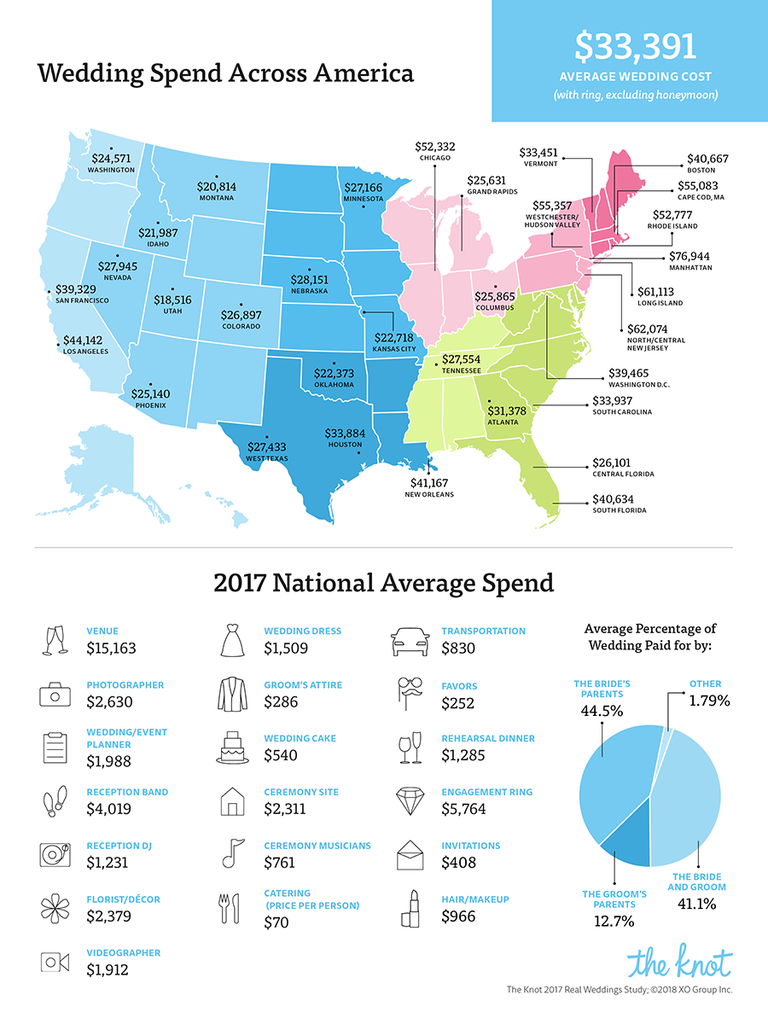
Before you tour venues or book vendors, establish a hard spending limit. According to NerdWallet, the U.S. average wedding cost sits around $34,000, while Zola’s 2026 data suggests a per-guest baseline of $150 to $300. Multiply that per-guest estimate by your headcount to determine your starting point, then adjust for your specific location and lifestyle preferences.
This framework prevents overspending on one element, like flowers, at the expense of another, like photography. Start with your total available funds, subtract the 20% buffer, and divide the remainder using the 50/30 split. This creates a realistic ceiling for every line item before you commit to a single vendor.
Calculate venue and catering costs
Venue and catering typically consume the largest share of a wedding budget. According to 2026 data from Zola, the national average for a wedding venue is $8,573, while catering averages $6,927. These figures represent fixed base costs that scale with your guest count, making them the first two numbers you need to pin down.
To estimate your total spend, start by selecting a venue type and confirming its rental fee. Next, request per-head catering quotes from your top three vendors. Most couples budget $150 to $300 per guest for food and beverages, though this varies by location and service level. Add any required rental fees for tables, chairs, or linens to this base.
Research venues in your target area and filter by capacity and style. Confirm the base rental fee and what is included in that price, such as chairs, tables, or basic linens.
Contact your shortlisted venues or external caterers for a per-guest price. Ask for a tiered menu option (e.g., plated vs. buffet) to see how much you can save by adjusting the service style.
Calculate the total cost by multiplying the per-guest catering price by your headcount, then add the venue rental fee and any additional rental items not included in the base package.
Budget for entertainment and DJ rates
Entertainment typically claims 8–10% of your total wedding budget. For a standard 100-guest celebration, expect to spend between $1,500 and $3,000 for a professional DJ. This range covers the basics: setup, performance, and a curated playlist. However, costs can spike quickly if you add specialized lighting, uplighting, or premium sound systems for large venues.
Several factors drive these prices. The duration of the event is the primary variable; most DJs charge an hourly rate after a base package of four to five hours. Travel fees apply if your venue is outside their standard service area, often adding $1–$2 per mile. Equipment upgrades, such as wireless microphones for speeches or dance floor lighting, usually cost an additional $200–$500.
To avoid hidden fees, ask for a detailed line item in the contract. Specifically, inquire about overtime rates, which typically range from $150 to $300 per hour after the agreed-upon time. Also, confirm whether the DJ’s travel expenses, parking fees, or meal requirements are included in the quoted price. A transparent contract ensures you pay only for what you booked, preventing surprise charges on the big day.
Estimate open bar and beverage expenses
Beverage costs are often the most volatile line item in a wedding budget because they scale directly with guest count and consumption habits. Understanding the three main service models—open bar, limited bar, and cash bar—helps you predict your final tab before signing contracts.
Compare bar service options
The table below outlines the typical cost structures and guest experiences for each model based on 2026 industry averages from Zola and NerdWallet.
| Service Model | Avg. Cost per Guest | Typical Duration | Guest Experience |
|---|---|---|---|
| Open Bar | $30–$50 | 3–4 hours | Unlimited drinks; highest cost |
| Limited Bar | $15–$25 | 3–4 hours | Beer, wine, and signature cocktails only |
| Cash Bar | $0–$5 | All event | Guests pay per drink; lowest host cost |
Calculate your total beverage budget
To estimate your total spend, multiply the per-guest cost by your headcount. For a 100-guest wedding with a limited bar at $20 per person, you would budget $2,000 for beverages. If you choose an open bar, that same guest count could easily reach $4,000–$5,000.
Consider adding a 10% buffer for unexpected consumption spikes or extended hours. Some venues also charge a corkage fee if you bring your own wine, which can offset the savings of a limited bar option.
Track remaining vendor and misc costs
Most budgets miss the "invisible" costs: photography, attire, and gratuities. These items often exceed initial estimates if tracked late. NerdWallet reports the national average wedding cost at $34,000 in 2026, with these hidden expenses driving significant overages NerdWallet.
Photography is the largest single vendor cost, typically ranging from $2,000 to $4,000. Attire, including alterations, usually adds another $1,000 to $1,500. Gratuities for vendors like bartenders and DJs often total 15-20% of their service fee.
Track these in your spreadsheet immediately. Zola data suggests budgeting $150-300 per guest for general costs, but this excludes fixed expenses like photography Zola. Set aside a 10% contingency for these miscellaneous items to prevent last-minute financial stress.
Finalize your wedding cost checklist
Before signing any contracts, run through this five-point audit to ensure your wedding cost budget is locked in and realistic. Precision here prevents mid-planning surprises, keeping your total spend aligned with the national average of $34,000.
-
Total budget set based on 50/30/20 rule
-
Venue booked with date confirmed
-
Catering menu and per-head cost finalized
-
DJ or band quoted with overtime terms
-
10% contingency buffer added to spreadsheet
Frequently asked questions about wedding costs
Planning a wedding budget often raises specific questions about total spend and allocation. Use these answers to clarify your financial scope and avoid common estimation errors.
No comments yet. Be the first to share your thoughts!