
Set your total wedding budget first
Before you browse DJ packages or ask about open bar options, you need a hard number. This total is the ceiling for everything else. It includes the venue, food, attire, photography, and yes, the entertainment and drinks that often eat up the largest chunks of cash.
Start with what you can actually afford. Look at your savings, any contributions from family, and your monthly cash flow. Be honest about what is truly available. This figure becomes the anchor for every subsequent decision.
Once you have that total, write it down. Treat it as a fixed constraint, not a suggestion. When you later evaluate a DJ’s rate or calculate the cost per drink for an open bar, you will measure those expenses against this single, clear number. Without it, you risk overspending on one category and scrambling to cut costs elsewhere later.
Add up all available funds, including personal savings and family contributions. Subtract any non-wedding financial goals you are currently funding to ensure you do not go into debt.

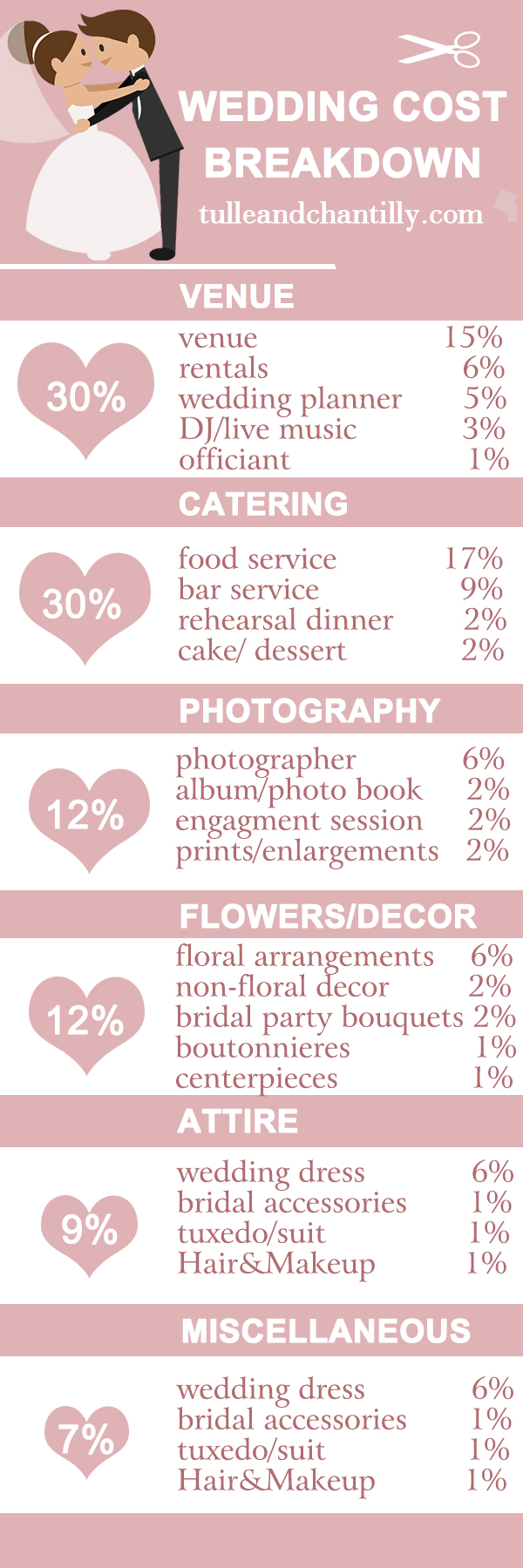
Allocate portions of your total to major categories like venue, catering, and attire. This prevents one vendor, such as a popular DJ or a premium caterer, from consuming half your budget.
Set aside 10-15% of your total budget for unexpected costs. This buffer covers last-minute guest additions or vendor fees that arise closer to the date.
Allocate funds for venue and catering
The venue and catering typically consume the largest share of a wedding budget, often totaling 45% to 50% of the total spend. This makes them the primary drivers of your per-head cost. When you allocate funds here, you are setting the baseline for the guest experience, from the space itself to the food and drinks served.
Start by determining your guest count, as this number directly dictates the final price. Most venues charge a flat rental fee, but catering is almost always calculated per person. A plated dinner usually costs more than a buffet, while an open bar will significantly increase the per-head total compared to a limited beer-and-wine service. Understanding these per-head variables helps you adjust your guest list or menu choices to stay within your 45-50% allocation.
To see how meal selection impacts your bottom line, compare standard service styles. The difference between a buffet and a plated dinner can be substantial, affecting both the cost and the timeline of your reception.
| Service Style | Est. Cost Per Head | Pros | Cons |
|---|---|---|---|
| Buffet | $40 - $65 | Lower labor costs, flexible timing | Longer lines, less formal |
| Plated Dinner | $60 - $90+ | Formal atmosphere, controlled timing | Higher labor costs, stricter timeline |
Once you have a per-head estimate, multiply it by your guest count to get your total catering budget. Add the venue rental fee to this number to see your total venue and catering cost. If this total exceeds 50% of your overall budget, you will need to either reduce your guest list or choose a less expensive venue or service style. This step ensures you do not overspend on the largest portion of your wedding before considering other vendors.
Budget for entertainment and DJ rates
Entertainment typically accounts for about 10% of your total wedding budget. While you might spend less than $1,000 on a local DJ for a small reception, prices rise significantly in major metropolitan areas or for high-demand vendors. Understanding what is included in that price tag helps you avoid unexpected costs on the day of the event.
Average DJ Costs and Packages
Most wedding DJs charge between $800 and $2,000 for a standard five-to-six-hour reception. This fee usually covers the performance, basic sound equipment for the room, and a wireless microphone for toasts. Some vendors offer "premium" packages that include uplighting, monograms, or an MC who also handles timeline management, which can push the price toward $3,000.
Overtime and Additional Fees
Always clarify the overtime rate in your contract. Standard packages rarely include the full six hours of continuous play; they often end with a "last song" cue. If the party runs late, DJs typically charge $150 to $300 per additional hour. Be wary of hidden costs like travel fees, parking, or meals for the vendor, which are sometimes added to the final invoice.
What’s Included in the Service
A professional DJ brings more than just a laptop. Look for vendors who provide a dedicated sound system capable of filling your venue without distortion, rather than relying on the venue’s in-house audio, which is often designed for speeches, not dancing. Reputable DJs also provide a planning form to curate your playlist, ensuring they know your "must-play" songs and any "do-not-play" tracks before they arrive.
Calculate open bar expenses carefully
Alcohol is one of the fastest ways to derail a wedding budget. Unlike catering, which is usually a fixed per-head cost, bar costs can spiral based on guest consumption and drink selection. To keep things predictable, you need to choose a service model early and calculate the total based on that structure.
Choose your bar model
You generally have three options, each with a different pricing structure:
- Full open bar: Guests order whatever they want. This is the most expensive option because you pay for every drink poured, regardless of consumption habits.
- Limited bar: You offer beer, wine, and a couple of signature cocktails. This caps the cost per drink and simplifies the bar program for staff.
- Drink tickets: Guests receive a set number of tickets (e.g., two) upon entry. Any additional drinks are paid for by the guest. This shifts the cost burden away from the couple.
Estimate the total cost
Once you pick a model, use the per-person or per-hour rate provided by your vendor. Industry data suggests beverage packages often range from $30 to $50 per person for standard options, with premium packages reaching $100 or more.
- Multiply the per-person cost by your guest count.
- Add a 10-15% buffer for unexpected consumption or staff gratuities.
- Confirm if the quote includes glassware, ice, and garnishes, as these are often extra.
By locking in your bar type and calculating the total upfront, you avoid the shock of a final tab that exceeds your initial estimate.
Apply wedding reception etiquette tips
Etiquette isn’t just about manners; it’s a budgeting tool. Clear expectations prevent last-minute add-ons that inflate costs. When guests know what to expect, they don’t pressure you into expensive extras.
Limit the bar to specific hours
An open bar for the entire reception is the fastest way to blow your budget. Instead, offer a limited open bar for the first two hours, then switch to a cash bar or offer beer and wine only. This is standard practice and rarely offends guests if communicated clearly on the invitation or wedding website.
Send invitations on time
Late invitations lead to higher guest counts. When people don’t receive an invite until the last minute, they are more likely to RSVP "yes" to secure their spot, or worse, show up uninvited. Send save-the-dates six months out and invitations eight weeks before the wedding. This gives you accurate headcounts for catering, which is your largest expense.
Be clear about dress code
A vague dress code leads to guests showing up in inappropriate attire, which can disrupt the vibe and force you to intervene. Specify "black tie," "semi-formal," or "casual" on the invitation. This helps guests feel comfortable and avoids awkward situations that might otherwise require costly last-minute adjustments.
Handle gifts gracefully
Never mention gifts on the invitation. It’s considered poor form. If guests ask, direct them to your wedding website where you can list registry details politely. This keeps the focus on your celebration, not the presents, and maintains a gracious tone.
Review your wedding budget checklist
Before signing any contracts, run through a final audit of your wedding budget checklist. This step catches hidden costs that often slip through the cracks, such as service charges, overtime fees, or vendor meal counts.
Verify that every line item in your spreadsheet matches the signed agreement. Cross-reference payment schedules to ensure you aren’t overpaying early, and confirm that all requested inclusions—like setup time or cleanup—are explicitly written down.
-
Confirm all vendor fees are itemized in contracts
-
Check payment schedule against cash flow
-
Verify inclusion of taxes and service charges
-
Ensure cancellation and refund policies are clear
A thorough review prevents surprise invoices on the big day. Treat this as your final quality control before committing your funds.
Common wedding budget: what to check next
Planning a wedding budget often raises specific questions about vendor rates and hidden costs. These answers help you allocate funds accurately and avoid surprise invoices.
How much does a wedding DJ cost?
A professional wedding DJ typically costs between $800 and $1,500 for a standard five-hour reception. This rate usually includes the sound system, lighting, and travel. Budget DJs may charge less, but experienced professionals who manage the event timeline and read the crowd are worth the premium. Entertainment generally accounts for about 10% of your total budget.
What does an open bar cost per person?
Open bar pricing varies by region and liquor tier. A standard open bar with domestic beer, wine, and well liquor runs $30 to $50 per guest. Premium options with top-shelf spirits and signature cocktails can push this to $70 or more. Some couples choose a limited bar (beer, wine, and signature drinks) to reduce costs while keeping guests happy.
How much should I budget for catering?
Catering and beverages are often the largest expense, consuming 24% to 29% of the total budget. Expect to pay $75 to $150 per plate for food alone. If you add an open bar, the total per-person cost for food and beverage can reach $100 to $150. Always confirm if service charges, taxes, and gratuities are included in the quoted price.
No comments yet. Be the first to share your thoughts!