


Understanding Wedding Costs
Most couples find that venue and catering consume more than half the total budget. According to The Knot’s 2025 real wedding data, venue and rentals average 29% of total spending, while catering, cake, and drinks take another 24%. This leaves just 47% for photography, music, attire, and all other essentials.
The average cost of a wedding with 100 guests typically falls between $20,000 and $30,000, though this varies wildly by region. In high-cost metro areas, the same guest count can easily push past $40,000. Knowing your baseline helps you decide where to splurge and where to cut.
Is $10,000 a small wedding budget?
Yes, $10,000 is considered a small wedding budget. It usually requires a micro-wedding or elopement with fewer than 50 guests, a non-traditional venue (like a public park or family home), and minimal catering options. You can make it work, but you’ll need to prioritize carefully.
What is considered a good budget for a wedding?
A "good" budget is one that covers your top priorities without debt. For most couples, this means setting a realistic total based on savings and income, then allocating percentages to key vendors. Avoid comparing your total to others; focus on what matters to you.
What is the 50/20/30 rule for weddings?
The 50/20/30 rule isn’t standard for weddings, but some couples adapt it: 50% for venue and food, 20% for attire and decor, and 30% for photography, music, and miscellaneous fees. This is a rough guide, not a rule. Adjust based on your local vendor rates.
What is the average cost of a wedding with 100 guests?
The average cost for a 100-guest wedding is approximately $25,000–$35,000 nationally. This includes venue rental, catering per plate ($50–$100), alcohol, and basic services. Add-ons like live bands, premium bar packages, or luxury decor can push this higher.
Wedding costs choices that change the plan
Every dollar spent on one element pulls from another. Understanding where the money goes helps you decide what to cut and what to protect. The following table compares three common budget tiers to show how priorities shift as the total number changes.
| Category | Modest ($15k-25k) | Average ($30k-45k) | Premium ($60k+) |
|---|---|---|---|
| Venue & Catering | 50-55% | 45-50% | 35-40% |
| Photography & Video | 8-10% | 10-12% | 15-18% |
| Attire & Beauty | 10-12% | 8-10% | 5-7% |
| Florals & Decor | 10-15% | 8-10% | 12-15% |
| Music & Entertainment | 5-7% | 6-8% | 10-12% |
Venue and catering usually consume the largest share, often 40-55% of the total. If you prioritize food quality or a unique location, you will likely need to reduce spending on photography or flowers. Conversely, choosing a simpler venue allows you to allocate more funds to a photographer or a live band.
Photography and video capture the memories, so many couples protect this budget. However, it is possible to hire a talented photographer for less by cutting back on second shooters or editing time. Entertainment costs vary widely; a DJ is significantly cheaper than a live band or full production crew.
Use the calculator above to test different scenarios. Adjust the percentages to see how shifting funds from one category to another impacts your remaining budget. This helps you make informed decisions before committing to vendors.
Turn the research into a practical decision framework
A budget is just a set of priorities in disguise. Once you have the raw numbers from your guest count and venue quotes, the next step is to build a framework that keeps your spending in check without sacrificing the moments that matter most. This section walks you through the specific checks to make before you sign any contracts.
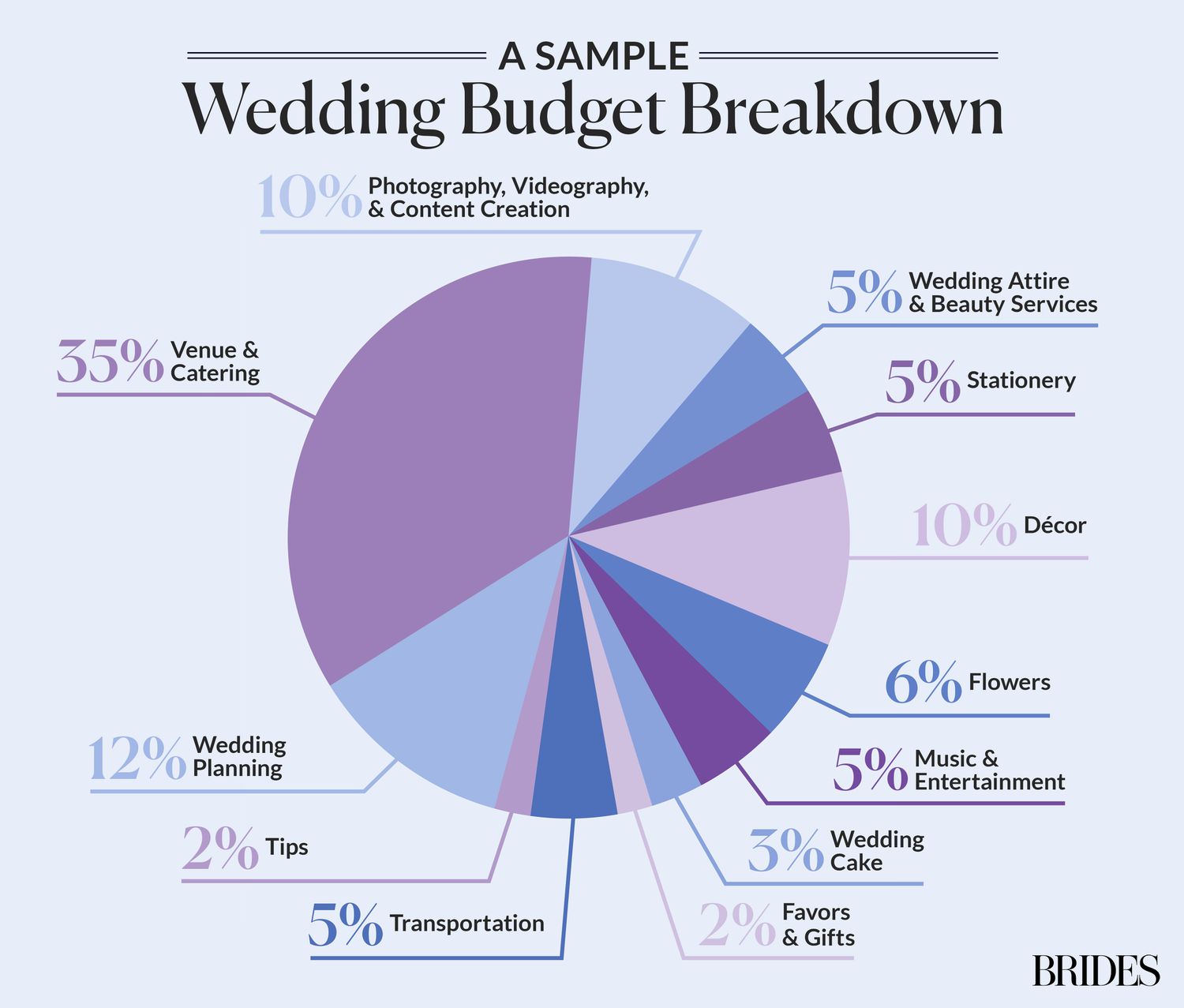
Start with the total amount you can spend. Subtract the fixed costs first: venue rental, catering minimums, and legal fees. What remains is your discretionary fund. Identify one or two non-negotiables (e.g., a specific DJ or open bar) and allocate a generous percentage to them. Everything else gets a strict limit. This prevents the "death by a thousand cuts" where small add-ons blow the budget.
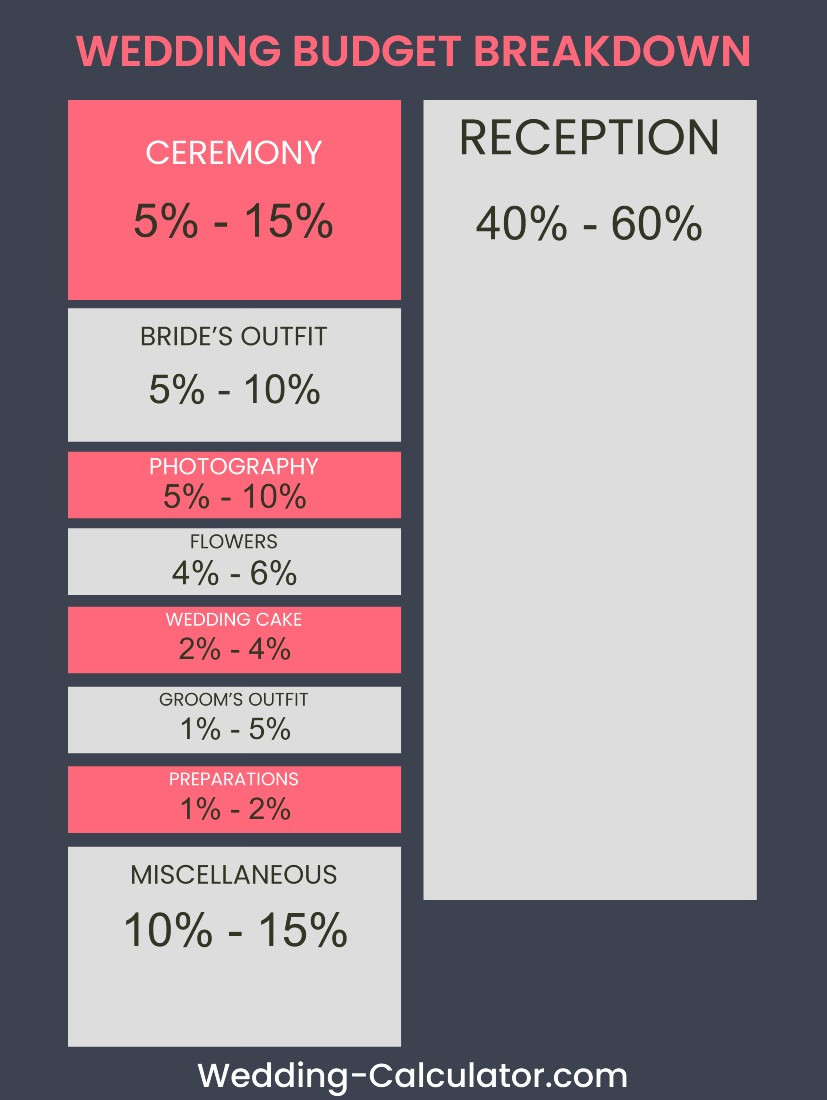
Use this split to distribute your funds logically. Spend 50% on the "must-haves" (venue, food, drinks). Allocate 30% to the "nice-to-haves" (photography, flowers, music). Reserve 20% for the "unexpected" (taxes, tips, overtime fees, and a 10% contingency buffer). If your non-negotiables push the "must-haves" over 50%, you must trim the "nice-to-haves" to compensate.
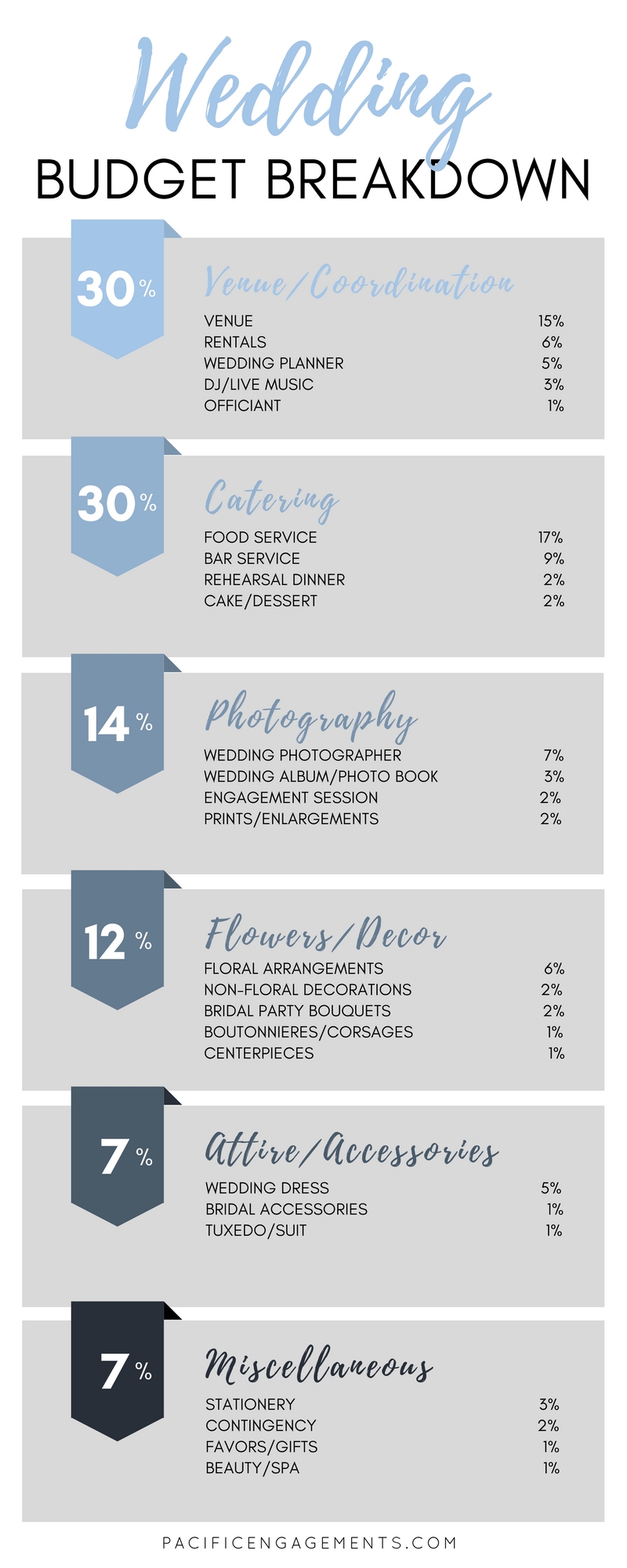
Do not rely on email threads or memory. Use a spreadsheet or a dedicated wedding budget calculator to log every quote. Include columns for the vendor name, total cost, deposit due date, and payment schedule. This makes it easy to see where the money is going at a glance and helps you spot duplicates or unnecessary services.
Before handing over any money, read the contract for hidden costs. Ask about service charges (often 18-22%), taxes, overtime fees, and cancellation policies. For DJs and photographers, confirm if travel fees or equipment rentals are included. If a vendor refuses to provide a detailed breakdown, treat it as a red flag.
Watch out for these budget traps
Most wedding budget templates look clean on paper but leave you covering gaps in the final invoice. The difference between a balanced budget and a debt spiral often comes down to how vendors quote their services and how you handle the "invisible" line items. Avoid these common mistakes to keep your spending realistic.
The "Per Person" Catering Trap
Vendors often quote a base price per plate that excludes taxes, service charges, and gratuity. A $100 per person menu quickly becomes $135 once you add the 22% service fee and tax. Always ask for the final per-head cost including all mandatory fees before signing a contract. If the vendor refuses to itemize, assume the final bill will be 25-30% higher than the initial quote.
DJ Rates vs. Hidden Equipment Fees
A DJ’s hourly rate rarely covers everything. Many companies charge extra for travel, overtime, and even the power supply. Some vendors require you to provide a dedicated 20-amp circuit for their equipment, which might mean paying an electrician. Ask for a flat-rate package that includes setup, sound, and lighting. If they insist on itemizing equipment rentals, compare those fees against a full-service package to see if you’re overpaying for basic gear.
Open Bar Pricing Ambiguity
"Open bar" is a vague term that can lead to massive overages. Some venues charge a flat fee per guest for the entire event, while others charge per drink consumed. If you choose per-drink, set a strict limit or hire a bartender to monitor consumption. For flat-rate bars, verify if premium liquors are included or if you’ll pay extra for top-shelf brands. A small guest list with heavy drinkers can easily blow a flat-rate budget if the terms aren’t clear.
The 50/20/30 Rule for Weddings
The 50/20/30 rule is a simplified framework for allocating your total wedding budget. It suggests spending 50% on essential expenses like venue and catering, 20% on important but flexible items like photography and music, and 30% on miscellaneous costs like attire, invitations, and tips. This method helps prioritize what matters most to you while capping discretionary spending. Use it as a starting point, then adjust based on your actual vendor quotes.
Wedding costs: what to check next
Couples often hit roadblocks when trying to balance their vision with their bank account. Here are answers to the most common questions about wedding budgets, based on current market data.
No comments yet. Be the first to share your thoughts!