
Where wedding costs actually go
The average American wedding cost $36,000 in 2026, according to Zola’s latest data. This baseline figure varies significantly based on location, guest count, and specific priorities, but it provides a realistic starting point for planning your budget.
The reception venue and catering are the two largest wedding expenses, together accounting for more than 40% of the total budget. This means that for the average couple, nearly half of their spending goes toward food, drinks, and the space where the celebration takes place.
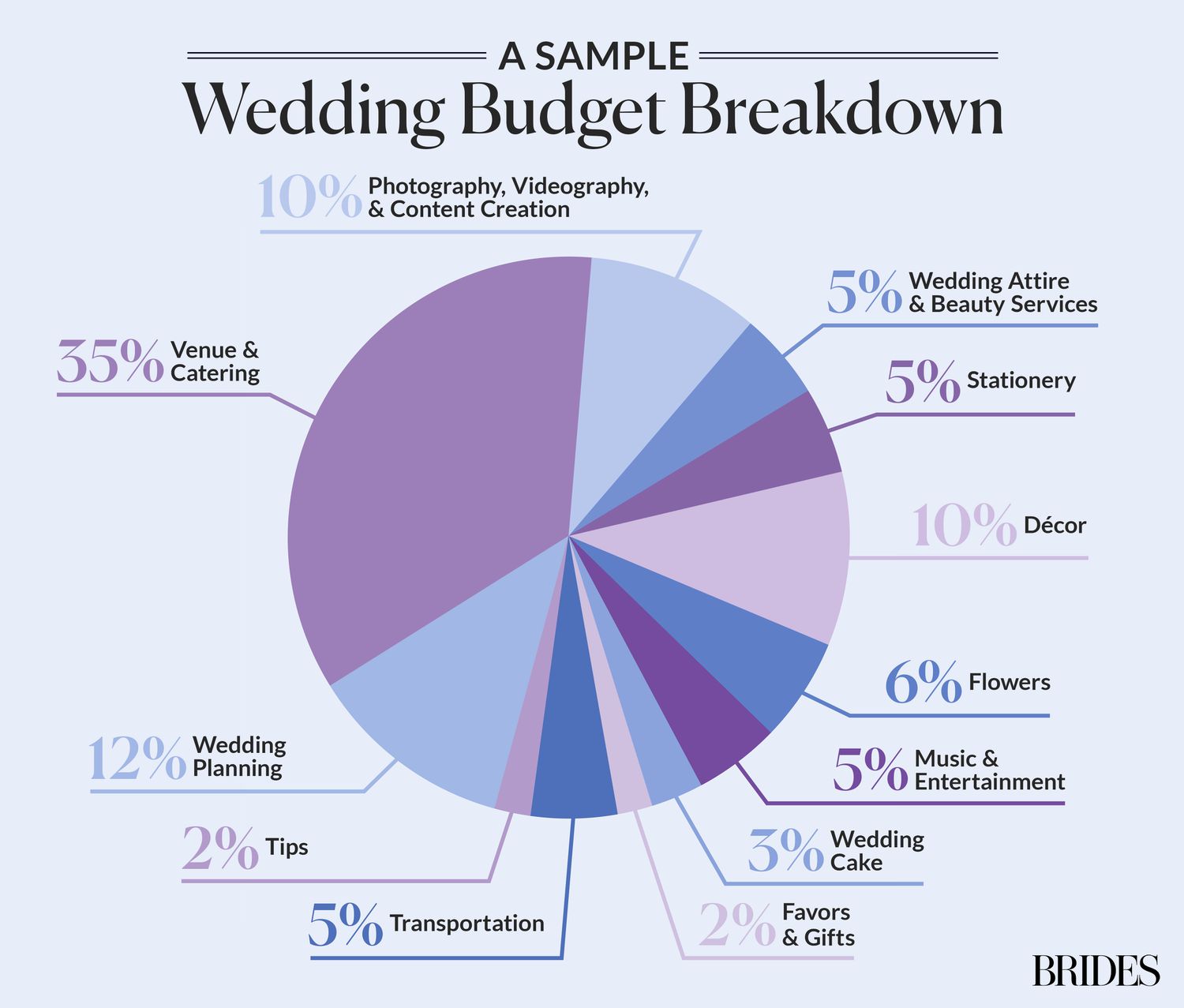
Beyond the venue and catering, other major categories include photography, music or entertainment, and attire. These expenses, while smaller individually, add up quickly. Understanding this percentage split helps you allocate funds more effectively, ensuring that the aspects of your wedding day that matter most to you receive the appropriate share of the budget.
Calculate your total wedding budget
Start by setting a hard number for your total wedding budget. This figure is the ceiling for every decision you make, from the venue capacity to the DJ’s hourly rate. Without a clear total, it is easy to drift into spending that leaves no room for the elements that matter most to you.
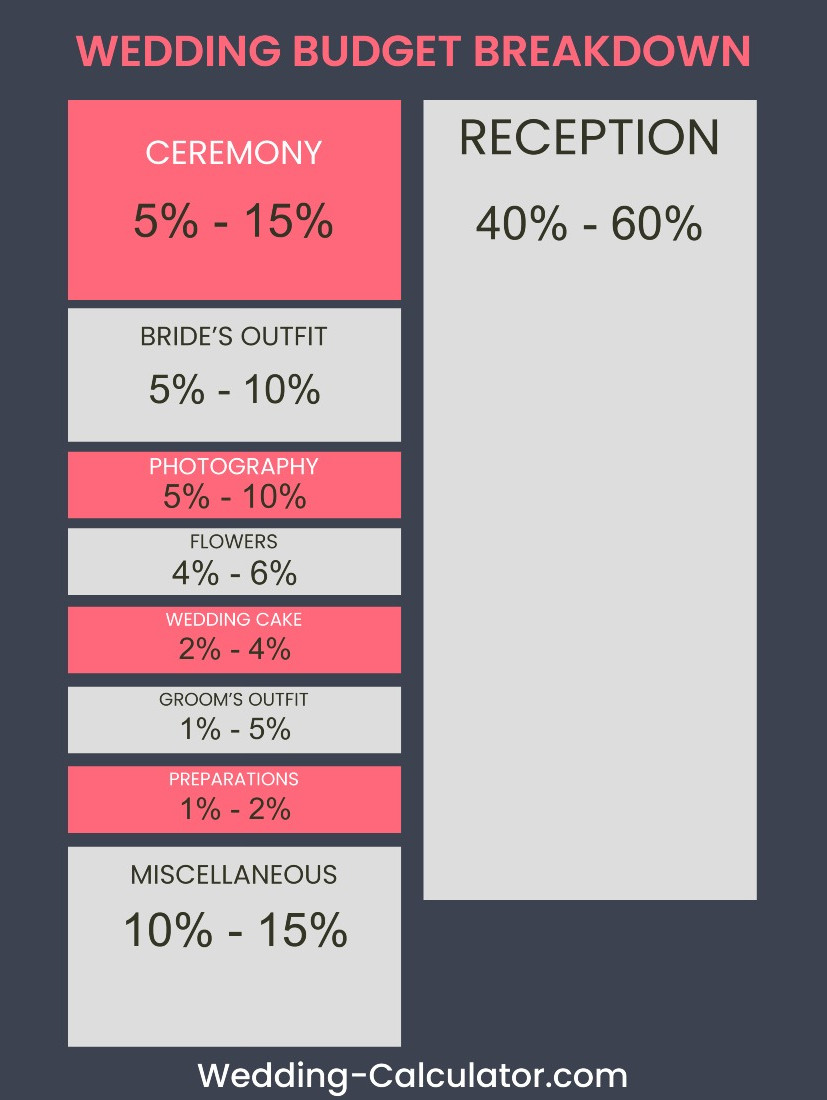
Enter your total budget and the number of guests you plan to invite. The tool below uses standard industry percentages to break down those numbers into realistic line-item estimates. This helps you see exactly how much is allocated for the venue, food, drinks, and entertainment before you sign any contracts.
These ranges are based on data from real couples and standard vendor pricing models. Your actual costs will vary by location and vendor availability. Use these estimates as a baseline to identify which categories you might need to adjust to fit your financial comfort zone.
DJ rates and entertainment costs
Entertainment is often the third-largest line item in a wedding budget, sitting right behind the venue and catering. For most couples, hiring a professional DJ for a wedding costs between $1,200 and $2,500. This range covers the standard six to eight hours of performance time that most receptions require. While you can find solo performers for less or premium bands for significantly more, a dedicated DJ offers the most consistent control over the room’s energy without the logistical overhead of a large musical ensemble.
The final price tag rarely reflects the music alone; it is largely driven by the technical infrastructure the DJ brings to your venue. A professional setup includes high-fidelity speakers, mixers, wireless microphones for toasts, and backup equipment to prevent silence if something fails. Many DJs charge extra for this gear rental if it is not bundled into their base package. You should also ask about travel fees, which can add $1 to $2 per mile if the venue is outside their standard service area. These hidden costs can easily push a base rate of $1,500 over $2,000 before the first song plays.
Hours of operation are the next biggest variable. Most DJs include a standard eight-hour block, which typically covers the cocktail hour, dinner, and the main dance party. If you want music to start early during the cocktail hour or keep the party going until the venue’s absolute latest cutoff, expect to pay an overtime fee. These overages usually range from $150 to $250 per hour. Planning your timeline carefully to fit within the included hours is the most effective way to keep entertainment costs predictable.
Open bar expenses and drink packages
Alcohol is often the most volatile line item in a wedding costs breakdown. While food prices tend to stay relatively fixed, beverage budgets can swing wildly depending on guest consumption and the quality of spirits selected. Most venues and caterers charge on a per-person basis, which means every additional guest or upgraded liquor tier adds directly to your total.
Limited bar vs. premium open bar
You can control costs by choosing between a limited bar, a premium open bar, or a cash bar. A limited bar typically includes domestic beer, house wine, and a few standard cocktails, costing between $30 and $50 per person. A premium open bar features top-shelf liquor and a wider cocktail menu, pushing prices to $60–$90 per person.
| Bar Type | Est. Cost Per Person | Pros | Cons |
|---|---|---|---|
| Limited Bar | $30–$50 | Predictable budget; easier to manage consumption | Guests may bring their own bottles if not monitored |
| Premium Open Bar | $60–$90 | Higher quality drinks; fewer complaints | Expensive; risk of over-consumption |
| Cash Bar | $0–$5 | Lowest upfront cost; guests pay for drinks | Can feel impersonal; may limit guest enjoyment |
Managing consumption and hidden fees
Beyond the per-head price, watch for service charges and taxes. Venues often add a 20–25% service fee on top of the bar tab, and alcohol taxes vary by state. Some vendors also charge a "dry hire" fee if you bring your own liquor, so always ask about corkage or service markups.
To keep expenses in check, consider a beer and wine only option for the reception, reserving hard liquor for a signature cocktail station. This hybrid approach can reduce your average cost per person by $10–$15 while still offering variety. Always get a written estimate that includes tax and service charges to avoid surprises on the final bill.
Hidden costs that break budgets
Wedding costs often balloon because of the small fees vendors don't always highlight upfront. Service charges, taxes, gratuities, and equipment rentals can easily add thousands to your final bill if you don't plan for them.
Service charges and taxes
Vendors frequently add 20% to 25% in service charges on top of quoted prices. These fees cover staffing and overhead but are rarely included in initial estimates. Sales tax applies to many of these charges as well, depending on your state. A $5,000 DJ package might actually cost $6,250 or more once these percentages are applied.
Gratuities and tips
Tipping is expected for many wedding vendors, though it’s not always mandatory. DJs, bartenders, and photographers often receive tips ranging from 10% to 20% of their fee. If you’re hiring a DJ who also provides lighting or sound equipment, tipping on the total rental cost is common practice. Budget an extra $200 to $500 for gratuities across all vendors.
Equipment rentals and fees
Venues often list rental fees for tables, chairs, linens, and dance floors separately from the space rental. These costs can range from $10 to $25 per person, depending on the style and quality of items. Some venues charge additional fees for outside vendors, including DJs, who need to use their power sources or staging areas. Always ask for a full list of potential rental costs before signing a contract.
Plan your wedding costs before booking
Organizing your finances early prevents last-minute surprises. Start by setting a total cap, then allocate percentages to each vendor category. This method keeps your Wedding Costs predictable and ensures you cover essentials like the venue and catering before splurging on details.
Once you have your baseline numbers, track every deposit and final payment. Use a spreadsheet to log dates and amounts. This simple habit helps you spot hidden fees, such as service charges or overtime rates, before they inflate your final bill.
Frequently asked questions about wedding costs
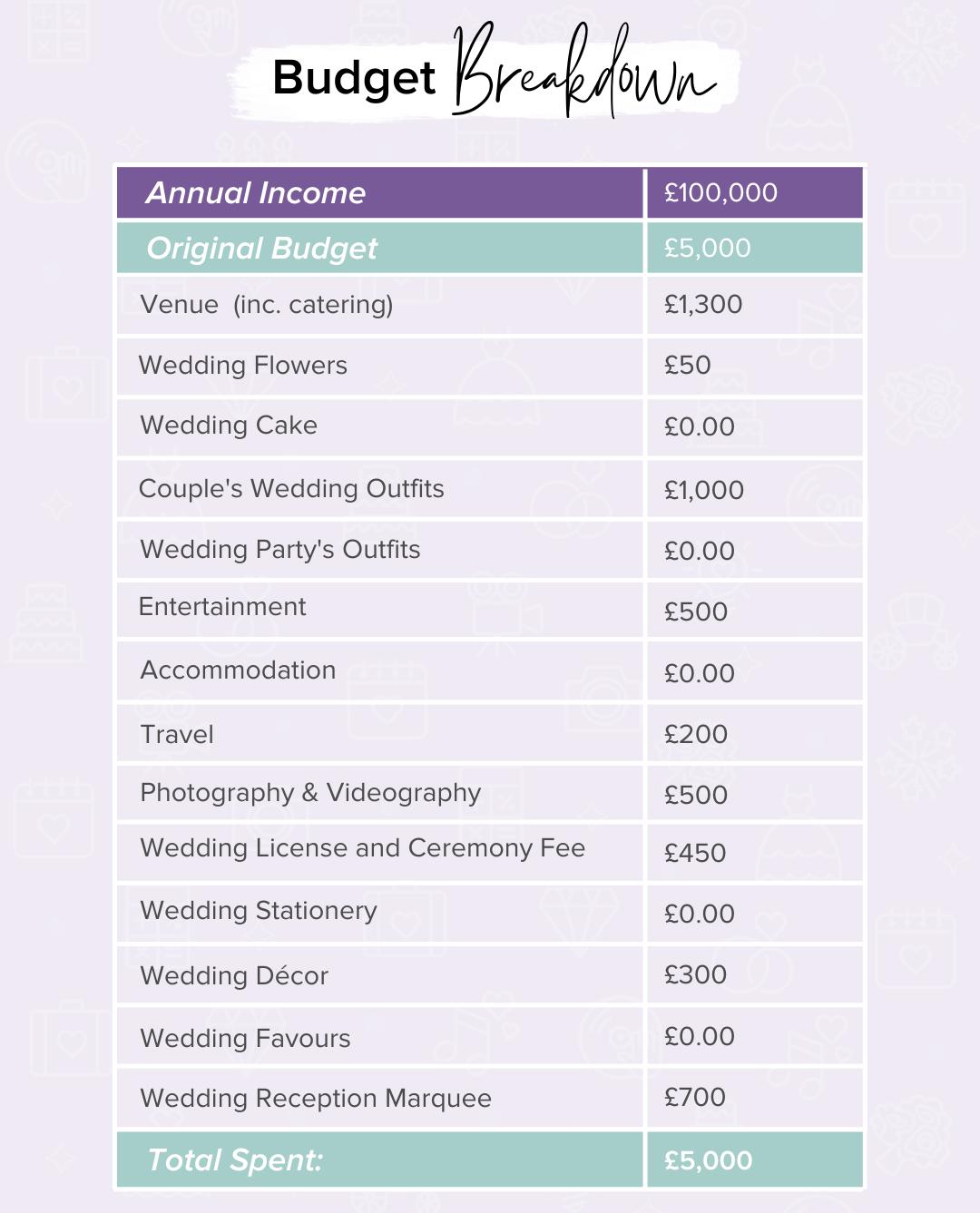
Couples often ask how their personal budget compares to national averages or if smaller totals are realistic. The average wedding costs $36,000, but that figure includes large receptions and high-end venues. Many couples successfully plan their event for much less by adjusting guest counts and vendor choices.
No comments yet. Be the first to share your thoughts!