

Set your total wedding budget first
Start by determining the exact amount of money you are willing and able to spend. This number should be the sum of what you are contributing, what your families are contributing, and any savings you have set aside. Avoid starting with a "dream" list and working backward; instead, anchor your planning in a hard financial ceiling. The average wedding in the United States costs approximately $34,000, but that figure varies wildly based on location and guest count.
Once you have a total figure, allocate it using a percentage-based framework. A common approach is to assign 50% to essential costs like the venue and catering, 30% to important but flexible items such as photography and entertainment, and 20% to miscellaneous expenses and a buffer for unexpected costs. For example, if your total budget is $20,000, you would reserve $10,000 for the venue and food. This prevents overspending on one category, like a $1,800 DJ, at the expense of another, like catering which often runs $80 per person.
This method acts as a financial guardrail. Without a total budget, it is easy to underestimate the cumulative cost of small items like favors, rentals, and gratuities. By defining the total spend upfront, you create a clear structure for every subsequent decision, ensuring that your wedding remains a celebration rather than a financial burden.
Calculate venue and food costs
Venue and catering typically consume the largest share of your wedding budget, often totaling over a third of the entire expense. Understanding how these costs scale with your guest count is essential for accurate planning. The average wedding costs about $34,000, with food and beverage alone accounting for roughly 26% of that total ($13,665). The venue rental itself is another major line item, averaging around $5,450 to $12,000 depending on the location and season.
Per-guest pricing is the primary driver for catering costs. In many markets, expect to pay between $80 and $100 per person for a standard plated dinner, though high-demand areas like San Jose can push this to $200 or more. This figure usually includes the meal, non-alcoholic beverages, and basic service staff. If you opt for a buffet or food stations, costs may drop slightly, but labor fees often remain similar.
Stat The average cost per guest is ~$80-$100 depending on location.
When budgeting, always ask for a detailed breakdown that separates the rental fee from the food and labor costs. Some venues charge a flat room fee plus a per-head catering minimum, while others bundle everything into a single per-guest price. Clarifying this structure early prevents surprise charges on your final invoice.
Compare DJ and band costs
Entertainment often takes up a significant chunk of your wedding budget. According to NerdWallet data, the average wedding costs about $34,000, with a standard DJ costing around $1,800. This is a baseline figure, but live bands can vary wildly depending on their size and reputation. Understanding these price differences helps you allocate funds effectively without overspending on the party.
A DJ provides a cost-effective solution for most couples. The $1,800 average typically includes the equipment, travel, and several hours of performance. You get a wide variety of music genres and the ability to take requests, which keeps the dance floor active. This option is ideal if you want specific songs without the logistical complexity of a large group.
Live bands offer a higher-energy experience but come with a much steeper price tag. A four-piece band might cost between $3,000 and $5,000, while larger groups or well-known acts can exceed $10,000. The higher cost reflects the number of musicians, their gear, and the rehearsal time required. If your priority is a live, dynamic performance, this investment may be worth it.
| Service | Typical Cost | What’s Included | Music Flexibility |
|---|---|---|---|
| DJ | $1,800 | Equipment, setup, 4-6 hours | High |
| 4-Piece Band | $3,000 - $5,000 | Musicians, gear, 3-4 sets | Medium |
| Large Band/Top Act | $10,000+ | Full crew, travel, sound/lighting | Low |
Calculate open bar costs based on guest count
Alcohol is often the most volatile line item in a wedding budget. Unlike catering, which usually has fixed per-head pricing, beverage costs fluctuate based on consumption habits, drink menus, and duration. Planning for an open bar requires estimating total volume rather than just headcount.
Start by determining your guest list size and the length of the reception. Most standard receptions run for four to five hours. If you are serving a full bar with premium liquors, expect higher per-guest costs than if you are offering beer and wine only. Industry averages suggest spending between $70 and $120 per guest for a four-hour open bar, though this varies significantly by region and venue.
To get a precise number, multiply your expected guest count by the per-guest rate. For example, if you have 150 guests and the rate is $90 per person, your total beverage budget is $13,500. This figure should be compared against your total wedding budget. According to recent data, food and beverage often account for roughly 26% of total wedding costs, making it one of the largest expenses after the venue.
Choose limited bar or cash bar alternatives
If the open bar estimate exceeds your comfort zone, consider limiting the menu. A "beer and wine only" bar typically reduces costs by 30% to 40% compared to a full open bar. This option still feels generous to most guests while capping your liability.
Another option is a cash bar, where guests pay for their own drinks. This shifts the cost entirely to attendees but can feel less hospitable if not communicated clearly. A hybrid approach is popular: offer complimentary beer, wine, and a signature cocktail during the cocktail hour, then switch to a cash bar for the rest of the evening. This gives guests a taste of the open bar experience without the unlimited cost.
Always clarify your choice with the venue early. Some locations have restrictions on outside alcohol or require you to use their preferred vendor, which may limit your ability to switch to a cash bar or limited menu. Get these restrictions in writing to avoid surprise fees on the day of the wedding.
Apply wedding planner tips to save money
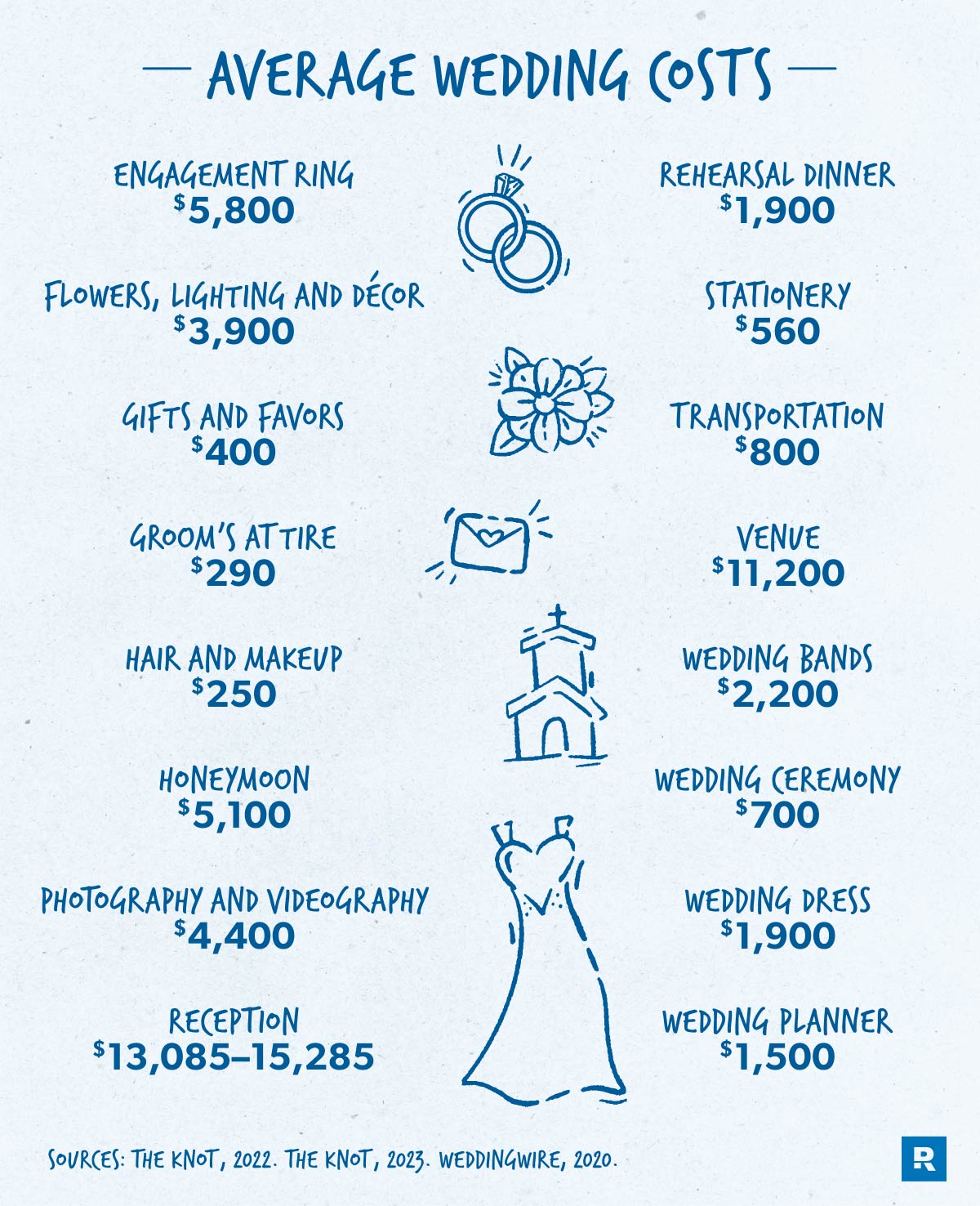
Wedding planners and experienced couples agree that the biggest savings come from strategic scheduling and direct negotiation. The average wedding costs $34,000, but that number is heavily influenced by peak season demand and vendor markups. By adjusting when and how you book, you can redirect thousands of dollars toward your honeymoon or home down payment.
Choose off-peak dates
Vendors charge premium rates for Saturdays in May through October. Moving your ceremony to a Friday, Sunday, or a winter month can slash venue and vendor fees by 20% to 30%. For example, a DJ who charges $1,800 for a peak-season Saturday might offer the same package for $1,200 on a Tuesday. The experience is identical, but the calendar shift changes the price tag.
Negotiate vendor packages
Never accept the first quote. Venues and caterers often have flexibility in their contracts, especially if you are booking during a slower period. Ask for a revised proposal that removes unnecessary line items, such as corkage fees if you bring your own wine, or table linen rentals if the venue already provides them. Planners often know which fees are standard and which are negotiable.
Limit per-guest costs
Your food and beverage bill is likely your largest expense, and it scales directly with your guest list. Caterers often charge per-person minimums that make small weddings expensive on a per-head basis. If you must have a large guest list, consider a plated dinner instead of a buffet to control portions, or switch from an open bar to a limited selection of beer, wine, and one signature cocktail. This simple change can reduce your bar tab by thousands.
-
Book a Friday or Sunday wedding to avoid peak pricing.
-
Ask vendors for itemized discounts on removed services.
-
Switch from open bar to limited drink menu.
-
Reduce guest count to lower per-head catering costs.
Frequently asked questions about wedding budgets
What is a normal budget for a wedding?
The average wedding costs about $34,000, according to NerdWallet. This figure serves as a baseline for planning, but your actual budget depends on guest count and location. Key line items include the venue ($12,000), food ($80 per person), and a DJ ($1,800). Use The Knot’s percentage breakdown to allocate funds proportionally rather than guessing.
Is $10,000 a small wedding budget?
Yes, $10,000 is considered a modest budget, roughly 30% of the national average. To stay within this limit, prioritize essentials like venue and food while cutting non-essentials. You may need to reduce guest count or choose a less expensive vendor for services like photography and entertainment.
What is the 50/30/20 rule for weddings?
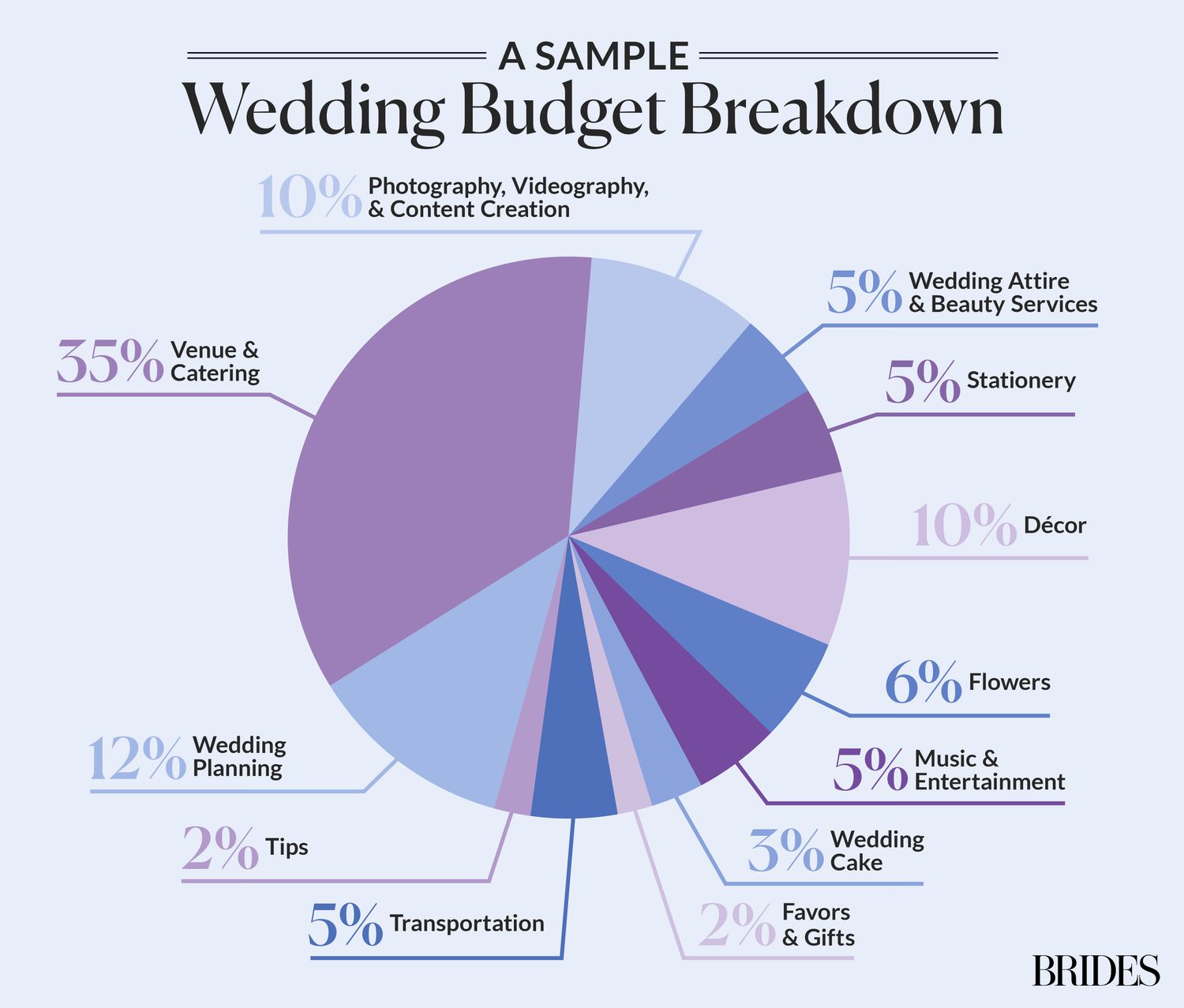
The 50/30/20 rule is a personal finance guideline, not a standard wedding budgeting method. It suggests spending 50% on needs, 30% on wants, and 20% on savings. For weddings, couples typically allocate percentages based on vendor categories (e.g., 40% venue/food, 10% attire) rather than this rigid ratio.
Is $10,000 a good amount for a wedding?
$10,000 is a solid starting point if you plan carefully. It allows for a decent venue and catering for a smaller guest list (e.g., 50-75 people). However, it leaves little room for high-end decor or premium entertainment. Focus on high-impact areas like food and photography to maximize the value of this budget.
Put Wedding Budget Breakdown into practice
No comments yet. Be the first to share your thoughts!